
What is Tui-Na?
Are you familiar with the wristbands people wear during long boat or car trips?
The wristbands serve a specific purpose.
They stimulate acupuncture points, particularly acupoint PC-6, which is located on the wrist.
Stimulating acupoint PC-6 alleviates symptoms like motion sickness, nausea, and enteritis.
The wristband example mentioned earlier is just one instance of how Westerners commonly apply Tui-Na, a practice rooted in stimulating acupuncture points.
However, its use extends well beyond travel aids.
According to archaeological studies in China, Tui-Na dates back to around 3000 BC.
It is one of the oldest forms of massage and bodywork globally.
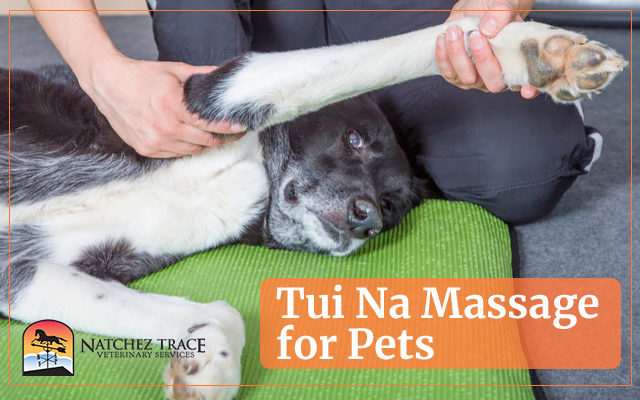
Tui-Na is also a holistic approach to veterinary pet care, offering a natural way to address various health issues.
Practitioners focus on understanding the animal’s body.
They identify specific points and meridians that might be causing discomfort or hindering the animal’s overall wellness.
By gently manipulating these points through massage, stretching, and applying pressure, Tui-Na practitioners restore balance and alleviate pain in pets.
However, the practice isn’t just limited to treating existing conditions; it’s also used preventively to maintain a pet’s overall health.
From joint stiffness and muscle tension to digestive issues or even emotional distress, Tui-Na techniques can be tailored to address a wide range of ailments in pets.
It also effectively complements traditional veterinary care, offering our furry friends a natural alternative or supplementary treatment.
Pet owners often find Tui-Na to be a soothing and beneficial experience for their animals.
It promotes relaxation and fosters a stronger bond between them and their pets.
Plus, it’s a non-invasive and drug-free approach, making it a gentle yet effective option for pet care.
The practice continues to gain popularity as more people recognize its potential to gently and holistically improve their pet’s quality of life.
Essentially, Tui-Na involves medical manipulation using hands, somewhat akin to contemporary Western practices such as chiropractic care and massage therapy.
Yet, numerous differences set it apart from Western modalities.
Tui-Na in Traditional Chinese Veterinary Medicine (TCVM)
Tui-Na is an integral aspect of Traditional Chinese Veterinary Medicine (TCVM).
It offers a holistic approach to address specific internal diseases diagnosed through TCVM.
Why is a diagnosis crucial? Without diagnosis, treatment can be unrewarding.
Tui-Na goes beyond generalities.
It tailors massage techniques based on a precise TCVM diagnosis, setting it apart from other forms of trigger point therapy.
Picture this: specific meridians and points on your pet’s body targeted to induce physiological effects.
The “trigger points” play a vital role, and you might have heard about them in the context of trigger point therapy.
However, Tui-Na takes it a step further, requiring a prior diagnosis to apply techniques that cater to your pet’s unique needs.
By applying pressure and specialized massage techniques, acupoints or trigger points can work wonders, offering relief and comfort.
It’s remarkable how ancient practices remain relevant today, providing targeted methods to alleviate various discomforts.
Tui-Na is one of TCVM’s foundational branches, alongside acupuncture, herbal medicine, and food therapy.
Practitioners administer treatments and empower pet owners by teaching home care techniques, enhancing the pet’s overall well-being.