
One of the most common questions I get from pet owners is about what foods are actually safe to share with their dog.
The truth is, not all human foods are safe. In fact, there are quite a few foods toxic to dogs that may surprise you. Some of these are things you might have in your kitchen every day.
Knowing which foods to avoid is one of the simplest and most important ways you can protect your dog’s health and prevent a serious emergency.
In this guide, I’m going to walk you through the most common foods toxic to dogs, explain why they can be harmful, and help you understand what to do if your dog accidentally gets into something they shouldn’t.
If you’ve ever found yourself wondering what foods are toxic to dogs, you’re in the right place.
But before we get into the full list, I want to share a quick video where I go over four of the most common foods we see causing problems in dogs based on what we experience in practice.
Take a moment to watch this; it’s a great place to start.
Why Some Foods Are Toxic to Dogs
One thing I always remind pet owners is that their dog’s body processes food very differently from yours.
Something that feels like a harmless snack to you can actually be dangerous for your dog. There are several foods toxic to dogs that we see cause problems, even in small amounts.
For example, things like chocolate, grapes, and raisins may seem harmless, but they can affect your dog’s kidneys, liver, or nervous system in very serious ways.
That’s why understanding which foods to avoid is so important. It’s one of the easiest ways you can help protect your dog from preventable health issues.
Another thing that often surprises pet owners is how little it can take to cause a problem. Even small amounts of foods toxic to dogs can have a real impact.
In some cases, you might see mild signs like vomiting or diarrhea. But with certain foods, the effects can be much more serious: things like seizures, anemia, or even organ failure.
What makes this more challenging is that symptoms don’t always show up right away. There may be a delay, so your dog may seem fine at first, and then signs develop later as the body starts to react.
That’s why it’s so important to know which foods to avoid and keep them completely out of reach.
When you understand what’s on that “no-go” list, you’re in a much better position to protect your dog and prevent an emergency before it happens.
7 Common Foods That Are Toxic to Dogs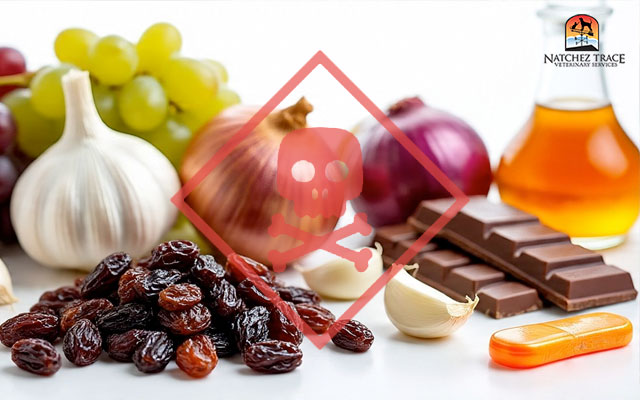
1. Raisins and Grapes
When clients ask me about foods toxic to dogs, raisins and grapes are always one of my biggest concerns.
Even small amounts can lead to acute kidney injury in some dogs, and what makes this especially challenging is that we don’t fully understand why certain dogs are affected more than others. Because of that unpredictability, I recommend avoiding them entirely.
Early signs may include vomiting, decreased appetite, or unusual lethargy. In some cases, symptoms can be delayed, which is why it’s important to act quickly if you suspect your dog has eaten them.
Since dogs are quick to grab food off the floor, keeping these foods toxic to dogs securely stored and out of reach is one of the simplest ways you can prevent a serious emergency.
2. Chocolate
Chocolate is one of the most common (and most serious) food toxicities I see in my clinic.
Chocolate contains a compound called theobromine, which your dog’s body cannot process effectively. As a result, it can affect the heart, nervous system, and, in more severe cases, other organ systems.
Darker chocolates, like baking chocolate or dark chocolate, contain higher levels of theobromine and are especially dangerous. However, even smaller amounts of milk chocolate can still cause problems, particularly in smaller dogs.
You may notice signs like vomiting, diarrhea, restlessness, or an increased heart rate. In more serious cases, this can progress to tremors, seizures, or even life-threatening complications.
Because of how commonly chocolate is found in the home, it’s one of the most important foods toxic to dogs to keep completely out of reach.
3. Garlic
Garlic is another food toxic to dogs that often comes up. And it’s a bit more nuanced than people expect.
Garlic belongs to the allium family, and in higher amounts, it can damage red blood cells and lead to anemia. Over time, this can cause signs like weakness, pale gums, fatigue, and decreased stamina.
Now, you may have heard that garlic is sometimes used as a natural flea deterrent. That idea has been around for a while, and in very small, controlled amounts, you can use it that way. However, the margin between what might be considered a “low dose” and what could cause harm isn’t always clear, and every dog responds differently.
Because of that, I generally recommend avoiding garlic as a home remedy unless you are working closely with your vet. The potential risks often outweigh the benefits, especially when safer, more reliable options for flea control are available.
It’s also important to remember that garlic can be found in many forms (fresh cloves, powders, and cooked foods), and all of these can contribute to toxicity depending on the amount.
For most pet owners, the safest approach is to treat garlic as one of the foods toxic to dogs and keep it out of your dog’s diet altogether.
5. Onions
Onions are another food toxic to dogs that often catches people off guard.
Like garlic, onions belong to the allium family and can damage your dog’s red blood cells. Over time, this can lead to a condition called hemolytic anemia, which reduces the blood’s ability to carry oxygen throughout the body.
One of the challenges with onion toxicity is that symptoms don’t always show up right away. It can take several days before you notice signs like vomiting, weakness, decreased energy, or even dark or discolored urine.
Another important point is that onions are harmful in any form: raw, cooked, powdered, or dried. That includes foods like soups, sauces, and seasonings that may contain onion without you realizing it.
Because of how common onions are in everyday cooking, they’re one of the most important foods to keep completely out of your dog’s diet.
5. Xylitol (Sugar Substitute)
Xylitol is extremely toxic to dogs and can quickly become dangerous. And it’s often “hidden” in everyday products.
Xylitol is a sugar substitute commonly found in sugar-free gum, candy, baked goods, and even some peanut butter brands. In your dog’s body, it triggers a rapid release of insulin, which can cause a sudden and severe drop in blood sugar.
This can happen very quickly, sometimes within minutes to an hour, and may lead to symptoms like weakness, vomiting, loss of coordination, or seizures. In more serious cases, xylitol can also cause liver damage or failure.
What makes xylitol especially concerning is how fast it acts and how common it is in everyday products. It’s not always obvious on labels, so I always recommend checking ingredients carefully before sharing any human food with your dog.
Because of its rapid and potentially life-threatening effects, xylitol is one of the most dangerous foods toxic to dogs, and it’s something I strongly recommend keeping completely out of reach.
6. Alcohol
When clients ask what foods are toxic to dogs, they should be most careful about alcohol is always high on my list.
Even very small amounts can have a significant impact on your dog’s system. Because dogs are smaller and process substances differently than we do, alcohol can quickly lead to dangerous drops in blood sugar, low body temperature, vomiting, and, in more serious cases, respiratory depression or coma.
It’s also important to remember that alcohol isn’t just in drinks. It can be present in foods made with alcohol, raw bread dough that ferments, or certain desserts.
Because of how potent the effects can be, alcohol should always be kept completely out of reach.
7. Ibuprofen (Advil, Motrin, etc.)
I also like to remind clients that some of the biggest risks aren’t foods at all. They’re common household medications.
Ibuprofen is one of the most dangerous examples I see. Even a single pill can cause serious damage to your dog’s stomach, leading to ulcers or bleeding. It can also affect the kidneys and, in higher doses, impact the nervous system.
One of the biggest concerns is how easily accidental exposure can happen. A dropped pill on the floor or a bottle left within reach is often all it takes.
I never recommend giving your dog ibuprofen for pain relief. Dogs process these medications very differently from us, and what’s safe for you can be toxic for them.
If a pill is dropped, pick it up immediately and make sure all medications are stored securely. Preventing access is one of the most important ways to protect your dog from accidental poisoning.
What to Do If Your Dog Eats Toxic Food
If your dog gets into one of these toxic foods for dogs, I don’t recommend taking a “wait and see” approach.
Some toxins act very quickly, while others can cause damage behind the scenes before you see any obvious signs. That’s why early action is so important.
If you suspect your dog has eaten something they shouldn’t, call us right away at 615-750-2248. Let us know what your dog ate, how much, and about when it happened so we can guide you on the next best step.
If it’s after hours, I recommend contacting a local emergency clinic.
In many cases, getting help early can prevent serious complications, protect your dog’s organs, and sometimes make the difference between a simple treatment and a much more serious situation.
The sooner we act, the better the outcome for your dog.
How to Prevent Accidental Poisoning
Knowing which foods are toxic to dogs to avoid is a great first step. But in my experience, prevention at home is what really keeps your dog safe.
A few simple habits can go a long way in avoiding an emergency:
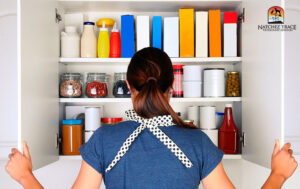 Keep risky foods out of reach. Store chocolate, grapes, onions, and other foods toxic to dogs in closed cabinets or higher shelves. Many dogs are very resourceful, especially when it comes to food.
- Set clear expectations with family and guests. Not everyone knows what foods are unsafe. A quick reminder not to share table scraps can prevent well-meaning mistakes.
- Be mindful while cooking. It’s easy to drop something without noticing. Grapes, garlic, or even a pill that falls on the floor can quickly become a problem. Cleaning up right away and keeping your dog out of the kitchen during food prep can make a big difference.
- Store medications securely. Human medications like ibuprofen are just as dangerous as certain foods. Keep them in sealed containers and well out of reach.
The goal isn’t to make things complicated. It’s to create a safe environment where your dog isn’t exposed to unnecessary risks.
When you take a few simple precautions, you’re far less likely to ever have to worry about foods toxic to dogs turning into an emergency.
Conclusion

Understanding which foods are toxic to dogs and how to avoid them is an important part of keeping your dog safe.
I know it can be tempting to share a snack, especially when your dog is looking at you like they should have a bite. But even small amounts of certain foods (like chocolate, grapes, or garlic) can lead to serious health problems.
When you know which foods are toxic and keep them out of reach, you greatly reduce the risk of an accidental emergency at home.
If you ever find yourself wondering, “Is this safe for my dog?” I always tell clients to follow a simple rule: when in doubt, leave it out. Sticking with dog-safe treats is the best way to protect your dog’s health and keep things simple.
And if you ever have questions or want guidance specific to your dog, I’m happy to help.
I offer both in-clinic and telemedicine consultations, and I work with many pet owners who continue seeing their primary veterinarian while partnering with me for integrative and holistic support.
If you’d like to learn more or schedule a consult, you can fill out our form, and we will personally reach out to you.
Frequently Asked Questions
What foods are toxic to dogs but safe for humans?
This is one of the most common questions I get. There are several foods toxic to dogs that are perfectly safe for you, including grapes, raisins, chocolate, onions, and garlic. Your dog’s body processes these very differently, which is why even small amounts can cause problems.
What should I do if my dog eats chocolate or raisins?
If your dog eats chocolate, raisins, or any other foods toxic to dogs, I recommend calling your veterinarian right away. Don’t wait for symptoms to appear. Early guidance can make a big difference in preventing serious complications.
Are all nuts bad for dogs?
Not all nuts are toxic, but some (like macadamia nuts) can cause serious issues, including weakness and tremors. Others are high in fat and can upset your dog’s stomach or even lead to pancreatitis. When in doubt, I usually recommend avoiding nuts altogether.
How quickly do symptoms appear after a dog eats something toxic?
It depends on the toxin. Some foods toxic to dogs, like xylitol, can cause symptoms within minutes. Others, like grapes or onions, may take hours or even days. That’s why I always recommend acting quickly, even if your dog seems normal at first.
Can a small amount of toxic food really hurt my dog?
Yes, in some cases it can. Certain foods toxic to dogs can cause serious effects even in small amounts, especially in smaller dogs. Because every dog responds differently, it’s safest to avoid these foods completely.
Why are some foods toxic to dogs but not to humans?
Your dog’s metabolism and digestive system work differently from yours. Certain compounds (like theobromine in chocolate or xylitol in sugar-free products) are processed much more slowly or differently, which allows them to build up to dangerous levels in your dog’s body.
What are the early signs of food toxicity in dogs?
Early signs can include vomiting, diarrhea, lethargy, drooling, or changes in behavior. If you notice any of these after your dog may have eaten foods toxic to dogs, it’s best to contact your veterinarian right away.