
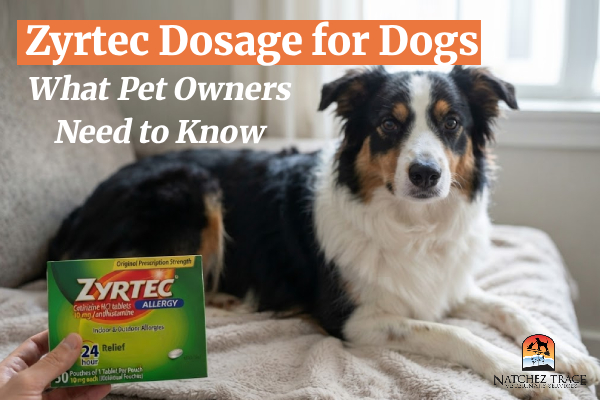
If you searched for “Zyrtec dosage for dogs,” you are probably concerned about itching or allergies. Zyrtec’s active ingredient is cetirizine.
 Veterinarians sometimes recommend cetirizine for dogs with mild allergy symptoms. However, the correct dose depends on your dog’s weight, health, and symptoms.
Always ask your veterinarian before giving Zyrtec to your dog. Human allergy products may contain other ingredients that can be dangerous for pets.
What Is the Recommended Zyrtec Dosage for Dogs?
Veterinary references list several cetirizine dosing ranges. A commonly published dose is approximately 1 milligram per kilogram of body weight.
Depending on the condition, a veterinarian may recommend cetirizine every 12 to 24 hours. However, you should not choose the dose or schedule without veterinary guidance.
One kilogram equals approximately 2.2 pounds. Therefore, 1 mg/kg equals about 0.45 mg per pound.
Available tablet sizes may not match the calculated amount. Also, your veterinarian may select a different dose or schedule.
The Merck Veterinary Manual lists 1 mg/kg or 10 to 20 mg per dog. Its reference interval is every 12 to 24 hours as needed.
Different conditions may require different protocols. Therefore, call your veterinarian before giving the first dose.
Is Zyrtec Safe for Dogs?
Plain Zyrtec is often well tolerated when a veterinarian recommends the correct dose.
Zyrtec contains cetirizine, a second-generation antihistamine. It blocks some effects of histamine during an allergic response.
Veterinarians may consider cetirizine for:
- Mild seasonal allergy symptoms
- Itchy skin
- Insect-bite reactions
- Hives
- Watery eyes
- Mild swelling caused by an allergic response
However, antihistamines do not help every itchy dog. Research suggests cetirizine provides only limited relief for canine atopic dermatitis.
One clinical study found satisfactory improvement in only 18% of participating dogs. Therefore, Zyrtec may work best as part of a broader allergy plan. Read the study on PubMed.
Which Zyrtec Products Are Dangerous for Dogs?
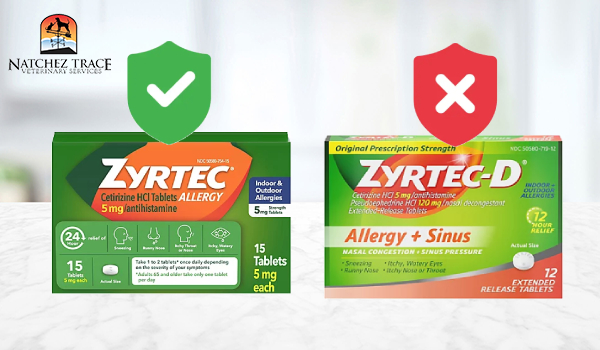
Only use a product containing cetirizine as the sole active ingredient.
Never give your dog Zyrtec-D unless a veterinarian specifically directs you. Zyrtec-D contains pseudoephedrine, which can be highly toxic to dogs.
Pseudoephedrine poisoning may cause:
- Agitation
- Rapid heart rate
- High blood pressure
- Tremors
- Seizures
- Dangerous changes in body temperature
Some liquid, chewable, or dissolving medications may contain xylitol. Xylitol is highly toxic to dogs and can cause severe low blood sugar and liver injury.

Always read the complete ingredient list before giving any human medication. If you are uncertain, send your veterinarian a photograph of the package.
What Side Effects Can Zyrtec Cause in Dogs?

Cetirizine usually causes fewer sedating effects than older antihistamines. However, some dogs may still become sleepy.
Possible side effects include:
- Drowsiness
- Vomiting
- Increased saliva
- Reduced appetite
- Restlessness
- Difficulty urinating
Contact your veterinarian if you notice a concerning change after giving Zyrtec.
Seek urgent veterinary care for trouble breathing, collapse, facial swelling, tremors, or seizures. Severe allergic reactions need immediate treatment.
Which Dogs Should Avoid Zyrtec?
Your veterinarian should review your dog’s health before recommending cetirizine.
Extra caution may be needed for dogs with:
- Kidney disease
- Liver disease
- Seizure disorders
- Urinary problems
- Glaucoma
- Pregnancy or nursing
- Significant chronic illness
Cetirizine is primarily removed through the kidneys. Therefore, dogs with kidney disease may need a modified plan.
Also, tell your veterinarian about every medication and supplement your dog receives. Combining sedating products may increase drowsiness.
How Quickly Does Zyrtec Work in Dogs?
Cetirizine may begin affecting histamine activity within a few hours. However, symptom improvement varies between dogs.
Some dogs respond after the first dose. Others show little or no change.
Zyrtec is not an ideal emergency treatment for a severe allergic reaction. Call a veterinarian immediately if your dog develops:
- Difficulty breathing
- Sudden weakness
- Collapse
- Severe facial swelling
- Pale or blue gums
- Repeated vomiting or diarrhea
Do not wait for an oral antihistamine to work during a possible emergency.
Can Zyrtec Treat Dog Skin Allergies?

Zyrtec may reduce mild itching in some dogs. However, persistent itching often needs a complete veterinary evaluation.
Several conditions can look like allergies, including:
- Fleas
- Mites
- Bacterial skin infections
- Yeast infections
- Food allergies
- Contact irritation
- Environmental allergies
- Hormone disorders
Antihistamines alone will not overcome an untreated infection or parasite problem.
An integrative allergy plan may include nutrition, flea prevention, bathing, skin-barrier support, and targeted supplements. Acupuncture or herbal support may also benefit selected dogs.
Your veterinarian can help you discover the cause and create a safe plan. Addressing the cause often provides better success than simply suppressing itching.
Frequently Asked Questions About Zyrtec Dosage for Dogs
Is Zyrtech the Same as Zyrtec?
“Zyrtech” is a common misspelling of Zyrtec. The active ingredient in plain Zyrtec is cetirizine.
Always check the ingredient panel because brand names can include different formulations.
Can I Give My Dog a 10 mg Zyrtec Tablet?
A veterinarian may recommend 10 mg for some dogs. However, 10 mg may be inappropriate for a small dog or a dog with certain health conditions.
Ask your veterinarian to calculate the correct dose before giving a tablet.
How Often Can Dogs Take Zyrtec?
Veterinary references describe dosing every 12 to 24 hours. The correct schedule depends on the dog and the condition being treated.
Do not increase the frequency because your dog remains itchy.
Can Dogs Take Generic Cetirizine?
Dogs may take a veterinarian-approved generic product containing only cetirizine.
Avoid formulas containing pseudoephedrine, xylitol, pain relievers, or other active ingredients.
Is Benadryl or Zyrtec Better for Dogs?
Each dog responds differently to antihistamines. Cetirizine usually causes less sedation than diphenhydramine, the active ingredient in Benadryl.
Neither medication controls every type of allergic itching. Your veterinarian can recommend the best option for your dog.
A Safer Approach to Zyrtec Dosage for Dogs
The correct Zyrtec dosage for dogs depends on more than body weight. Your dog’s health, medications, and type of allergy also matter.
Before giving Zyrtec, confirm the product contains only cetirizine. Then, contact your veterinarian for an appropriate dose.
If your dog struggles with ongoing itching, Natchez Trace Veterinary Services can help. We combine conventional diagnostics with integrative veterinary care.
Call 615-750-2248 or contact us to schedule an appointment.
Sources:
- Merck Veterinary Manual: Antihistamines for Integumentary Disease in Animals
- Merck Veterinary Manual: Atopic Dermatitis in Dogs
- VCA Animal Hospitals: Cetirizine
- Cook et al.: Treatment of Canine Atopic Dermatitis With Cetirizine
- Hsiao et al.: Effects of Cetirizine in Dogs With Chronic Atopic Dermatitis